
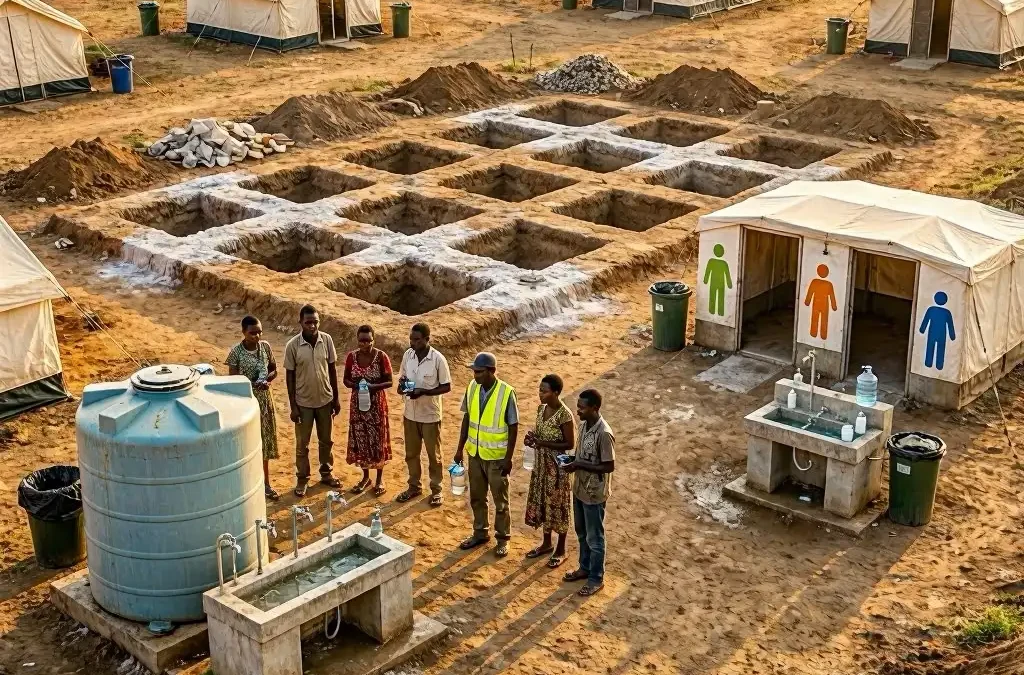
The creation of shelters after major earthquakes demands an immediate technical response to mitigate latent biological risks. Health management in disaster situations is fundamental to safeguarding public health and preventing outbreaks in vulnerable communities. Therefore, planning these spaces requires a deep understanding of pathogen transmission dynamics and the proper allocation of essential resources. A rigorous scientific approach allows us to dismantle common myths, such as the false belief that corpses automatically generate mass epidemics, prioritizing instead vector control and water management.
Water Prioritization and Disaster Health Management
Safe Supply and Disinfection
The guarantee of safe water represents the first line of defense in any provisional settlement. First, the stabilization of water resources requires the application of specific physical or chemical methods, ensuring a free residual chlorine concentration between 0.2 and 0.5 mg/L. Likewise, disaster health management demands constant monitoring of water turbidity, as sediments directly interfere with the effectiveness of disinfecting agents. Therefore, field teams must prioritize storage in clean, airtight tanks, preventing cross-handling by users.
Equitable Distribution and Storage
On the other hand, distribution logistics must ensure a minimum of 15 liters of water per person per day to cover drinking, cooking, and basic hygiene needs. Consequently, the location of collection points must respect accessible distances, preventing crowding that could compromise the safety of the population. The optimization of disaster health management is achieved when each household possesses narrow-mouthed containers, which drastically reduces secondary contamination during storage inside the tents.
Technical Disposal of Excreta in Contingencies
Construction of Emergency Latrines
The containment of excreta definitively prevents the contamination of groundwater and surface water sources. Indeed, deep trench latrines must be located at a minimum distance of 30 meters from any water point and at least 2 meters above the water table. In this way, disaster health management prevents the infiltration of leachate into local aquifers. Additionally, the architectural design of these units must include gender separation and the inclusion of functional handwashing stations with soap and water at their entrances.
Vector Mitigation and Leachate Control
Additionally, strict control of flies and rodents in waste disposal areas halts the fecal-oral transmission route. The regular application of layers of soil, lime, or ash over deposited excreta reduces unpleasant odors and blocks the breeding cycle of vector insects. Ultimately, proper disaster health management does not depend on technological sophistication, but rather on systematic maintenance, daily cleaning, and the organized participation of the refugee community itself.
Scientific Sources and References
-
World Health Organization (WHO): Environmental health in emergencies and disasters: a practical guide, Guidelines for drinking-water quality.
-
The Sphere Project: Humanitarian Charter and Minimum Standards in Humanitarian Response (Water supply, sanitation, and hygiene promotion chapter).
-
INSARAG / FEMA: Humanitarian assistance protocols and life support in collapsed structures.
Institutional Solidarity Note
From UDANA INC, we send a message of profound solidarity, fortitude, and hope to all families on the coast and in Caracas affected by this double earthquake. The Andean mountain range and our technical team remain spiritually united with every Venezuelan in these moments of adversity. With organization, scientific knowledge, and the joint effort of our people, we will overcome this contingency and rebuild safer, more resilient communities. Stay strong, Venezuela!